
After working with trees throughout Palm Beach and Broward Counties for years, I’ve learned that Florida’s subtropical climate presents unique challenges that most homeowners and property managers don’t fully understand until it’s too late. Our combination of extreme heat, hurricane-force winds, intense rainfall, and specific diseases creates a perfect storm for tree stress. Let me share what I’ve seen and what you need to know to protect your investment.
Florida’s Climate: Why Your Trees Are Under Constant Stress
Florida isn’t just hot. It’s a unique ecosystem where trees face pressures unlike anywhere else in the continental United States. According to a recent Miami Herald investigation, researchers estimate that up to 41% of Miami’s native trees will experience heat stress from rising temperatures. When you combine that with our hurricane season, salt spray, flooding, and disease pressure, you start to understand why tree health management here requires professional expertise.
I’ve responded to countless calls where property owners thought their tree was “just stressed” only to find advanced disease, structural failure risks, or pest infestations that could have been caught earlier with proper monitoring.
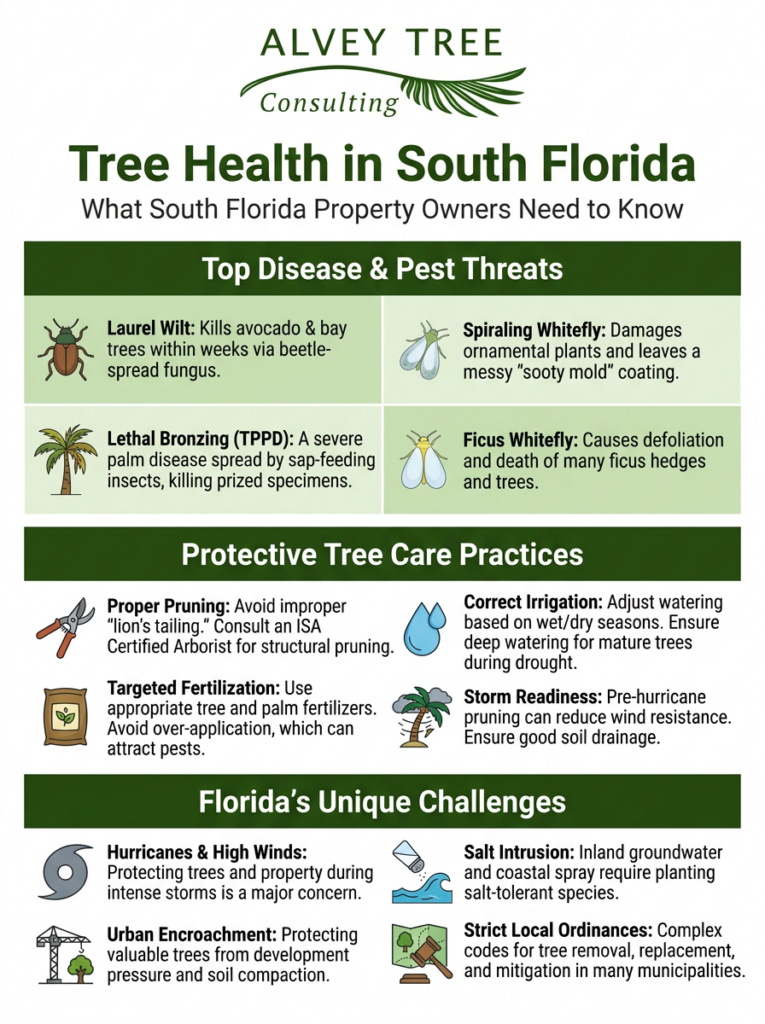 The Major Threats to Tree Health in South Florida
1. Disease Pressure: The Silent Killers
Lethal Bronzing (Formerly Texas Phoenix Palm Decline) This disease kills palms, particularly coconut palms, Canary Island date palms, and some species of fan palms. I’ve seen entire properties lose their signature palms to lethal bronzing because owners didn’t recognize early symptoms.
Early warning signs:
- Premature fruit drop
- Discoloration of older fronds (often starting with lower fronds turning brown)
- Blackening of flower stalks
- Sudden death of the spear leaf
Root Rot (Phytophthora) Florida’s combination of poor drainage and intense rainfall creates ideal conditions for root rot fungi. I frequently find this in trees that were planted too deep, have poor drainage, or experienced flooding.
Citrus Greening (Huanglongbing/HLB) This disease has devastated Florida’s commercial citrus industry, with over 90% of commercial grove acreage now affected. It is caused by a bacterial infection spread by the Asian citrus psyllid, and there is no cure. Individual residential trees can tell a different story, however. Well-maintained backyard citrus in urban South Florida neighborhoods can remain healthy and productive for years with proactive psyllid management using horticultural oils or soil-applied treatments. The psyllid is present throughout the region, so long-term risk to unmanaged trees is real, but healthy, flourishing backyard citrus is common and not unusual. A professional evaluation can identify early signs of HLB or psyllid activity before problems develop.
2. Hurricane and Storm Damage
Living in hurricane country means every property owner needs to think about storm preparedness. I conduct pre-season risk assessments where I evaluate:
Structural weaknesses:
- Co-dominant stems (double leaders that can split)
- Weak branch attachments
- Cavities and decay
- Poor root anchorage
Species vulnerability: Some trees handle hurricanes better than others. In my experience:
High wind tolerance:
- Live Oak
- Gumbo Limbo
- Mahogany
- Sabal Palm
Poor wind tolerance:
- Laurel Oak (notorious for limb failure)
- Ficus species
- Melaleuca
- Eucalyptus
Salt spray damage is another post-storm issue I deal with regularly. Even trees miles inland can suffer from salt-laden winds during major hurricanes. The symptoms (leaf browning, defoliation, dieback) often don’t appear until days or weeks after the storm passes.
3. Heat Stress and Drought
Florida summers are brutal, and climate data shows they’re getting worse. Trees under heat stress become more susceptible to everything else: pests, diseases, and structural failure.
Heat stress symptoms:
- Leaf scorch (brown, crispy edges)
- Premature leaf drop
- Leaf Wilting
- Slowed growth
- Increased susceptibility to borers and other pests
Drought stress often goes hand-in-hand with heat. Even in Florida’s rainy season, trees can experience drought stress during our dry spells, especially if they have compromised root systems or poor soil conditions.
4. Pest Infestations
Florida’s warm climate means pests remain active year-round. Some of the most problematic I encounter:
Ficus Whitefly and Thrips (damages foliage) Spiraling Whitefly (affects Gumbo Limbo) Asian Citrus Psyllid (vectors citrus greening) Palm Weevils (attack stressed palms) Various Scale Insects (weaken trees, promote sooty mold) Spider Mites (especially during hot dry periods)
Year-Round Tree Care Schedule for South Florida
Based on my experience working in Palm Beach and Broward Counties, here’s what proper tree health management looks like:
Late Winter (January-February)
Tasks:
- Structural pruning for most species (before spring flush)
- Fertilization (first application for established trees)
- Pest monitoring begins
- Pre-hurricane season risk assessments
Why this timing matters: Pruning before new growth reduces stress and allows wounds to compartmentalize before pest pressure increases. Early fertilization supports vigorous spring growth.
Spring (March-April)
Tasks:
- Monitor for pest emergence
- Deep watering if rainfall is insufficient
- Mulch replenishment (maintain 2-4 inch layer, keep away from trunk)
- Disease scouting (fungal diseases often appear with humidity increases)
Critical period: This is when I catch early signs of lethal bronzing, scale infestations, and fungal issues if I’m monitoring regularly.
Early Summer (May-June)
Tasks:
- Hurricane preparation (remove dead wood, reduce end weight on long limbs)
- Irrigation adjustments for intense heat
- Continued pest and disease monitoring
- No heavy pruning (trees need all their leaves for photosynthesis during stress periods)
Hurricane season: I schedule most of my pre-season consultations in May and early June, before peak hurricane season begins.
Fall (October)
Tasks:
- Additional fertilization application (be sure to check local ordinances)
- Post-hurricane damage assessment and corrective pruning
- Major pruning
- Root zone evaluation
Winter (November-January)
Tasks:
- Selective pruning of non-spring flowering trees
- Pest management (some insects remain active in South Florida winters)
- Planning and evaluation for next year
- Cold protection for sensitive species (rare but necessary during cold snaps)
When to Call a Certified Arborist (Before It’s Too Late)
I get calls that start with “I should have called you months ago.” Here’s when you should reach out:
Immediate concerns:
- Any tree leaning toward structures
- Large dead branches overhead
- Visible fungal growth on trunk or roots
- Sudden leaf drop or discoloration
- Storm damage
- Construction planned near trees
Proactive management:
- Annual health assessments
- Pre-hurricane season evaluations
- Before property transactions (tree issues affect property values)
- When planning construction or landscape modifications
- If you notice anything “different” about your tree’s appearance
Why Professional Management Pays for Itself
Trees that fail may damage roofs, vehicles, and neighboring properties. Trees that die prematurely from treatable diseases represent lost investment and lost property value.
Professional tree health management includes:
- Early disease detection
- Pest identification and treatment planning
- Risk assessment
- Species-specific care recommendations
- Proper pruning techniques that don’t harm trees
- Fertilization programs based on soil testing, not guesswork
Need a Professional Tree Health Assessment?
Alvey Tree Consulting provides ISA Certified Arborist services throughout Palm Beach and Broward Counties. I specialize in disease diagnosis, risk assessment, hurricane preparedness, and year-round tree health management.
Contact: AlveyTree@gmail.com