In South Florida, where hurricanes are annual realities and mature trees add significant property value, understanding tree risk is essential for protecting your investment and ensuring safety. As an ISA Certified Arborist serving Palm Beach and Broward Counties, I’ve seen that catastrophic tree failures often show warning signs well before disaster strikes. 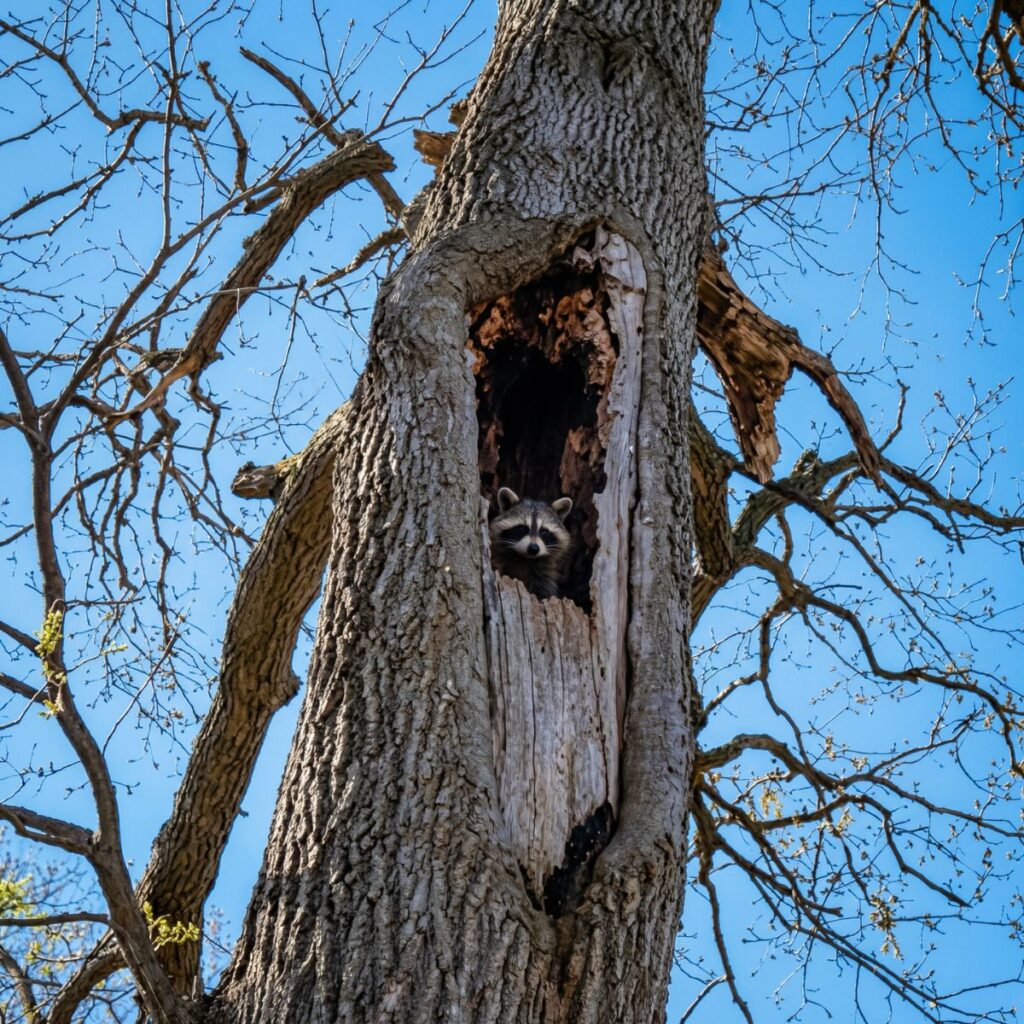
This guide introduces you to the systematic approach that Certified Arborists utilize for tree risk assessment.
What is Tree Risk Assessment?
Tree risk assessment is the process of identifying potential tree hazards and evaluating the likelihood of failure. It’s not about eliminating all risk (trees are living organisms), but rather managing risk to acceptable levels.
The International Society of Arboriculture (ISA) recognizes three assessment levels:
Level 1: Limited Visual Assessment – Quick walk-through for obvious hazards
Level 2: Basic Assessment – Thorough ground-level inspection (standard for most properties)
Level 3: Advanced Assessment – Detailed inspection using specialized equipment
Most property owners in Palm Beach and Broward need Level 2 assessments for informed decision-making and municipal compliance.
The Three Components of Risk
Professional tree risk assessment evaluates:
1. Target
What could be damaged if the tree fails? This includes people, structures, vehicles, utilities, and other valuable landscape features. A defective tree in a remote area poses less risk than the same tree overhanging a busy sidewalk or building.
2. Likelihood of Failure
How probable is tree failure? This examines structural defects, tree health, load factors (wind, unbalanced canopy), and site conditions (soil stability, root damage).
Likelihood is rated as: Imminent, Probable, Possible, or Improbable.
3. Likelihood of Impact
If the tree fails, will it strike the target? This considers how often people or property occupy the target zone and the size of the potential strike area.
Visual Inspection: What to Look For
When conducting an inspection, a Certified Arborist will systematically examine these areas:
Root System and Root Collar
Warning Signs:
- Exposed roots from erosion or construction
- Mushrooms or conks at the tree base (indicating decay)
- Severed roots from trenching or paving
- Soil mounding on one side (root failure)
- Tree sways when pushed (compromised anchorage)
In South Florida’s sandy soils, root stability is critical during hurricane season. Trees with compromised roots may be at risk of windthrow.
Trunk Assessment
Warning Signs:
- Vertical cracks extending through bark
- Cavities showing internal decay
- Fungal fruiting bodies (mushrooms, shelf fungi)
- Cankers (sunken, discolored dead bark)
- Sudden lean or lean toward structures
- Multiple trunks with tight V-shaped unions
- Included bark in branch attachments
South Florida Note: Lightning strikes are common and create cracks that may not be immediately visible. Always inspect after storms.
Branch Structure
Warning Signs:
- Dead branches (no foliage, brittle, loose bark)
- Hanging or partially broken limbs
- Weak branch attachments with acute angles
- Long horizontal branches with heavy end growth
- Crossing branches creating wounds
Trees with dense canopies in exposed locations experience higher wind loads. Proper pruning reduces sail area without compromising health.
Canopy Health
Warning Signs:
- Sparse foliage indicating stress
- Undersized or discolored leaves
- Premature leaf drop
- Dead twigs and branches in outer canopy
- Excessive water sprouts (stress response)
Poor canopy health suggests the tree is stressed and may be more susceptible to pests, disease, or structural failure.
Common South Florida Species Concerns
Laurel Oak: Prone to trunk and branch decay especially in older trees.
Slash Pine: Watch for bark beetle signs.
Ficus Species: Aggressive roots and vigorous growth mean that the tree can outgrow an area quickly.
Royal Palm: Yellowing fronds may indicate a nutrient deficiency.
When to Call a Certified Arborist
Professional assessment is necessary when:
- Municipal permits require documented Arborist Reports
- Trees overhang structures, utilities, or high-traffic areas
- Visible defects are present but severity is unclear
- Trees were damaged in storms or construction
- Property transactions require documentation
- Legal disputes involve tree liability
In Palm Beach and Broward Counties, many municipalities specifically require ISA Certified Arborist reports for development permitting, tree removal applications, and variance requests for protected trees.
The TRAQ Methodology
ISA’s Tree Risk Assessment Qualification (TRAQ) provides standardized evaluation using:
- Site & Target Assessment – Understanding land use and target exposure
- Tree Assessment – Systematic inspection of all tree parts
- Risk Rating – Assigning categories: Low, Moderate, High, or Extreme
- Mitigation Recommendations – Specific actions to reduce risk
TRAQ-qualified Arborists ensure assessments meet professional standards and regulatory requirements.
Risk Mitigation Strategies
Once risk is identified, several options can reduce it:
Pruning: Remove dead, diseased, or weak branches. Reduce end weight. Improve structure.
Cabling and Bracing: Support systems for trees with weak unions. Effective for high-value heritage trees.
Crown Reduction: Decrease canopy size to reduce wind resistance. Must be done properly.
Root Zone Protection: Establish protection zones during construction.
Monitoring: Periodic re-inspections for trees with defects that don’t warrant immediate removal.
Removal: When risk cannot be mitigated to acceptable levels.
Documentation and Liability
Proper documentation provides critical liability protection. If tree failure causes damage or injury, documentation demonstrates due diligence and informed decision-making.
For developers and commercial property owners, Arborist Reports should include:
- ISA Certified Arborist credentials and certification number
- Detailed tree inventory with condition ratings
- Photographic documentation
Hurricane Preparedness
Pre-storm assessment should focus on:
- Trees with structural defects near structures
- Dead or dying trees in any location
- Trees with previous unaddressed storm damage
- Large limbs overhanging roofs or power lines
Timing: Conduct assessments in April-May before hurricane season begins in June. Avoid the rush when storms approach.
Post-Storm: Have trees evaluated even if they appear intact. Hidden damage (root damage , cracks, weakened unions) may lead to failure months later.
Download Your Free Checklist
To help conduct preliminary observations, download our Tree Evaluation Checklist
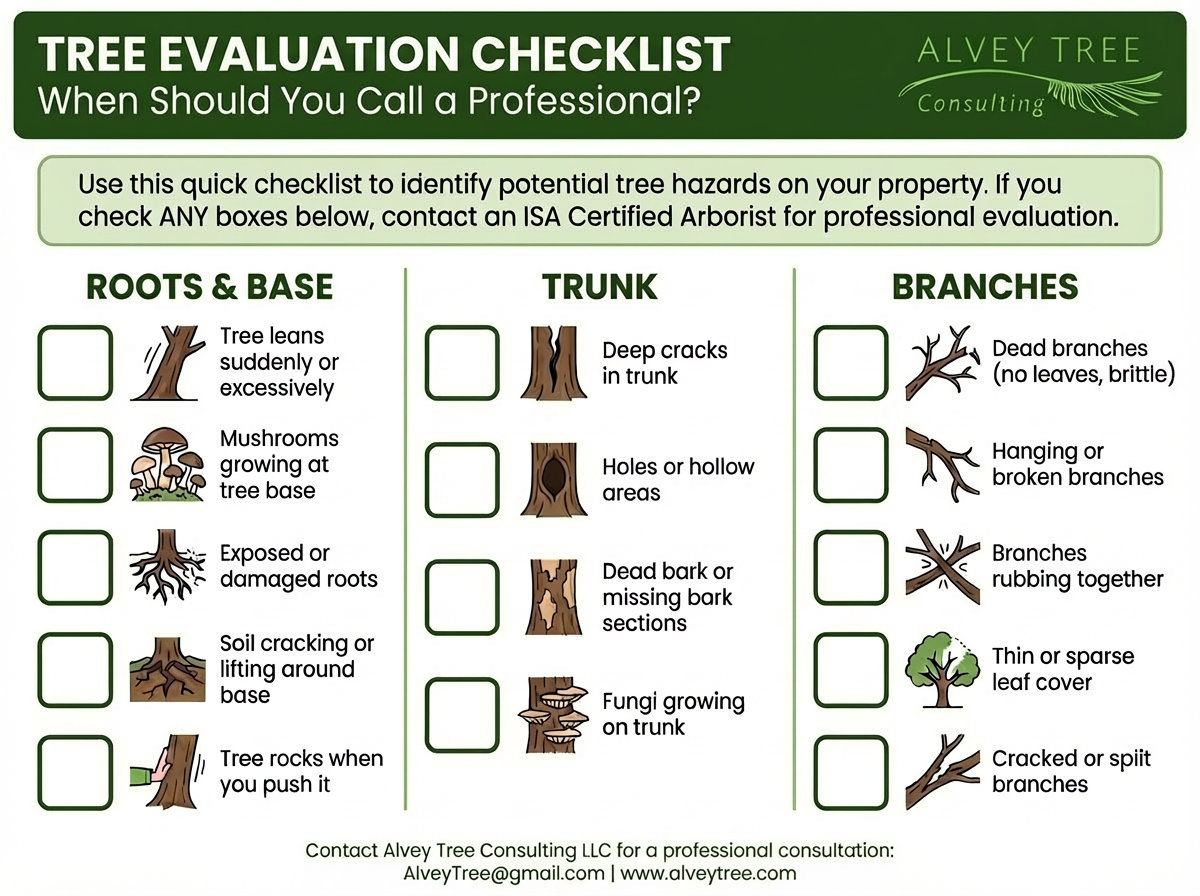
Remember: this checklist identifies potential concerns but doesn’t replace professional evaluation when risks are present.
Taking Action
Tree risk assessment balances preservation with safety. Most trees can be retained with appropriate care.
If you’ve identified potential concerns, the next step is professional evaluation by an ISA Certified Arborist with TRAQ qualification. In Palm Beach and Broward Counties, where preservation ordinances are strict and liability for tree failure is significant, professional assessment protects both your assets and legal standing.
Trees are dynamic living systems that change over time. Risk assessment is an ongoing process of observation, evaluation, and appropriate action. If you have identified concerns or need professional assessment, contact us today to schedule a consultation with a TRAQ-qualified Arborist.